
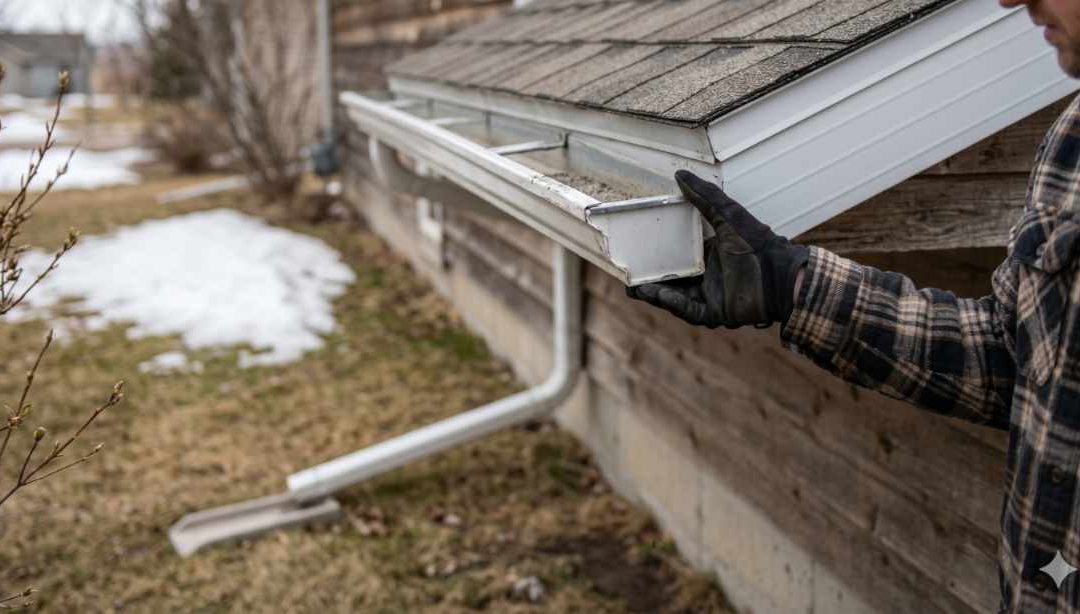
After a long South Dakota winter, your gutters have likely handled hundreds of pounds of ice and snow. As we move into the spring rainy season, your home’s foundation depends on a drainage system that works perfectly. In the surrounding areas, the transition from freezing temperatures to heavy spring downpours is the most common time for gutter failure.
A quick DIY inspection in March or April can save you thousands of dollars in foundation repairs or basement cleanup later in the year.
The Most Common Signs of Winter Gutter Damage
During your spring walk-around, you should look for specific physical changes in your aluminum gutters. The freeze-thaw cycle in our region is notorious for expanding metal and loosening the hardware that holds your system to the house.
Checking for Gutter Sagging
When snow sits in a gutter for weeks, it can cause the metal to stretch or the brackets to bend. This results in a dip in the middle of a long run. You can spot this by looking for standing water or mud in the center of the gutter even when it hasn’t rained recently. Properly functioning gutters should always be dry within an hour of a rainstorm ending.
Looking for Loose Fasteners
Check the gap between the back of your gutter and the wood fascia board. If you can see daylight or a physical gap, your screws or spikes have backed out. This usually happens because the wood expands when it gets wet and then shrinks when it freezes, slowly pushing the metal fasteners out of their holes.
Identifying Corner and End Cap Leaks
Even seamless gutters have joints at the corners and ends. Winter ice expansion is the primary cause of sealant failure. Look at the underside of your gutter corners for dark gray streaks or water stains. If you see these marks, the waterproof seal has cracked and is allowing water to drip directly onto your siding or foundation.
Why Downspout Placement Matters for Your Foundation
In cities like Vermillion and Tea, the soil can be heavy with clay. When water isn’t moved far enough away from the house, it saturates the ground and puts immense pressure on your basement walls.
- The 10-Foot Rule: Ensure all downspout extensions are attached and moving water at least 10 feet away from your foundation.
- Clear the Elbows: Shingle grit (the small pebbles from your roof) often settles in the elbows of your downspouts over the winter. If these are clogged, water will back up and overflow the top of the gutter, regardless of how clean the rest of the system is.
- Check Underground Drains: if you have pop-up emitters in your yard, make sure they aren’t buried under dead grass or silt from the winter snowmelt.
The Link Between Gutters and Fascia Rot
Your gutters are attached to a board called the fascia. When gutters overflow or leak from the back, that wood stays constantly damp. Over time, this leads to wood rot that can spread to your roof rafters.
If you notice peeling paint on the wood behind your gutters or dark stains on your soffit (the underside of your roof overhang), your gutters are likely failing to move water correctly. Catching this in the spring allows for a simple gutter adjustment rather than a full wood replacement project in the fall.
When to Call a Professional for a Tune-Up
While a visual check is easy for any homeowner, some repairs require specialized tools. If you find sagging sections, leaking corners, or rotted wood, it’s best to have a technician re-pitch and re-seal the system.
At A+ Gutters, we specialize in making sure your home is ready for the heavy thunderstorms that hit South Dakota every May and June. We use high-grade sealants designed to stay flexible in our extreme temperature swings, ensuring your “A+ Work” lasts for years to come.
Protect your home before the spring storms arrive. Get a Free Quote from A+ Gutters today or call/text us at (605) 351-5900 to schedule your spring maintenance.